
Let’s start with a question that deserves more attention: could the way you sleep be relevant to how you feel and function in the morning?
For some people, ageing brings subtle changes in everyday memory. A name may take longer to recall. You may walk into a room and forget what you came there for. A familiar word can briefly sit just out of reach.
These moments do not automatically indicate dementia, and they should not be treated as a diagnosis. But they are among the reasons researchers continue to examine the relationship between ageing, sleep and memory.
Three parts of the conversation are particularly easy to overlook.
One: mornings can feel less clear after a restless or fragmented night.
Two: everyday forgetfulness is often attributed to age, stress or simply being busy, without looking closely at the quality of sleep.
And three: attention often goes to how many hours someone spends in bed, rather than how comfortable and uninterrupted those hours actually are.
That last point brings the sleep environment into focus — including something used every night but rarely reconsidered: the pillow.

It can start with small moments that are easy to dismiss.
A familiar name takes longer to come to mind. Keys end up somewhere unexpected. A conversation loses its thread for a moment before the thought comes back.
Occasional lapses like these can happen for many reasons and do not, by themselves, indicate dementia. But when they become noticeable or persistent, they can understandably make people think more seriously about ageing, memory and overall wellbeing.
The mornings can add another layer.
After a restless night, some people wake feeling as though they have not fully recovered from the previous day. A stiff neck, tense shoulders or an uncomfortable sleeping position can make the first part of the morning feel harder than it should.
By lunchtime, that feeling may have eased. By evening, another night of sleep is already on the horizon.
This is where the connection between sleep and memory becomes worth examining — without assuming that every memory lapse has a single cause.
Researchers have studied how sleep relates to memory and cognitive function, particularly as people age. But those findings do not mean that ordinary forgetfulness is dementia, nor do they establish that changing a pillow can prevent cognitive decline.
What can be examined more practically is the sleep environment itself: the bedroom, the mattress, the sleeping position and the pillow used night after night.
Because before drawing conclusions about ageing or memory, it can make sense to first ask a simpler question:
How comfortable and uninterrupted is the sleep behind those mornings?

When memory changes become noticeable, it can be tempting to look for one simple explanation.
Age. Stress. A busy schedule. Not getting enough sleep.
But sleep is not only about the number of hours spent in bed. Researchers have also examined sleep continuity, sleep quality and how disrupted sleep may affect daytime alertness and cognitive function.
That distinction matters.
Someone can spend eight or nine hours in bed and still wake feeling that the night was restless or unrefreshing. A sleep tracker can record duration, but it cannot fully describe how comfortable the night felt or why someone woke up feeling less refreshed.
There are many ways people try to improve their sleep routine: changing their bedtime, reducing evening stimulation, using relaxation techniques or experimenting with different sleep products.
Some people also try supplements or sleep apps. These approaches are not interchangeable, and persistent sleep or memory concerns should be discussed with a healthcare professional rather than self-diagnosed.
A simpler part of the sleep environment is sometimes overlooked: the pillow.
Its height, shape, firmness and the way it supports the head and neck can all affect physical comfort during sleep.
So instead of asking only, “How many hours did I sleep?”, another useful question is:
“How did those hours actually feel?”
That question is where the sleep environment — including the pillow — becomes worth a closer look.

A closer look at the sleep itself can reveal a different part of the picture.
Eight hours in bed may sound reassuring, but total sleep time does not tell the whole story. Sleep can be interrupted during the night, and people may not always remember every brief awakening by morning.
Sleep research has examined how fragmented sleep can affect how rested and alert a person feels the following day. This is one reason that sleep quality cannot always be reduced to a single number on a watch or sleep-tracking app.
For someone who regularly wakes feeling as though the night passed in pieces, it can be useful to pay attention to the physical side of the sleep environment as well.
A stiff neck. Tense shoulders. Repeatedly changing position. Adjusting the pillow before settling back down.
These details do not prove that a pillow is responsible for disrupted sleep, and they certainly cannot explain memory changes or indicate dementia. But they can be useful clues when assessing whether a sleep setup feels comfortable.
A simple two-week sleep diary can help make those patterns easier to notice. Instead of relying only on a tracker, note when you remember waking, how comfortable your neck and shoulders feel, and how refreshed you feel in the morning.
The point is not to diagnose a problem from a sleep graph.
It is to ask a more practical question:
If you are spending eight hours in bed, is your sleep environment actually comfortable enough to support a restful night?
That question makes the pillow worth examining alongside the rest of the sleep setup.

So what does the research actually say about sleep, ageing and memory?
There is substantial scientific literature showing that sleep plays an important role in processes involved in learning and memory. Researchers use the term memory consolidation to describe how information acquired during waking can be processed and stabilised during sleep.
Research has also examined changes in sleep architecture with age. Deep sleep generally becomes less prominent and sleep can become more fragmented as people get older. That does not mean that ordinary changes in sleep are a disease, nor does it mean that every memory lapse is caused by poor sleep.
The important distinction is that research on sleep and memory describes a general relationship between sleep and cognitive processes. It does not show that a particular pillow can prevent dementia, improve memory or reverse age-related cognitive changes.
That left a much more practical question.
If sleep quality matters, what parts of the nightly sleep environment can actually be changed?
One obvious place to start is the pillow.
Pillow design can affect how the head and neck are positioned during sleep, and research has also examined pillow comfort and cervical support in relation to sleep quality, particularly among side sleepers.
That does not make every pillow suitable for everyone.
Different shapes, heights and materials feel different from person to person. A pillow that feels comfortable to one sleeper may feel too firm, too high or simply unsuitable for another.
So several common designs can be compared: a traditional feather pillow, a conventional foam pillow and a cooling gel design, for example.
The practical criteria are straightforward:
Does it feel comfortable? Does it provide the type of head-and-neck support you prefer? Does it stay in a useful position while you sleep?
This is also where Derila Ergo enters the picture.
Its design takes a more structured approach to pillow positioning, using a contoured memory-foam shape with different support areas for the head, neck and sides.
It does not need a promise about memory or ageing to make that proposition interesting.
The question is simply whether a pillow designed around head-and-neck support can provide a more comfortable sleep setup than the alternatives you have already tried.
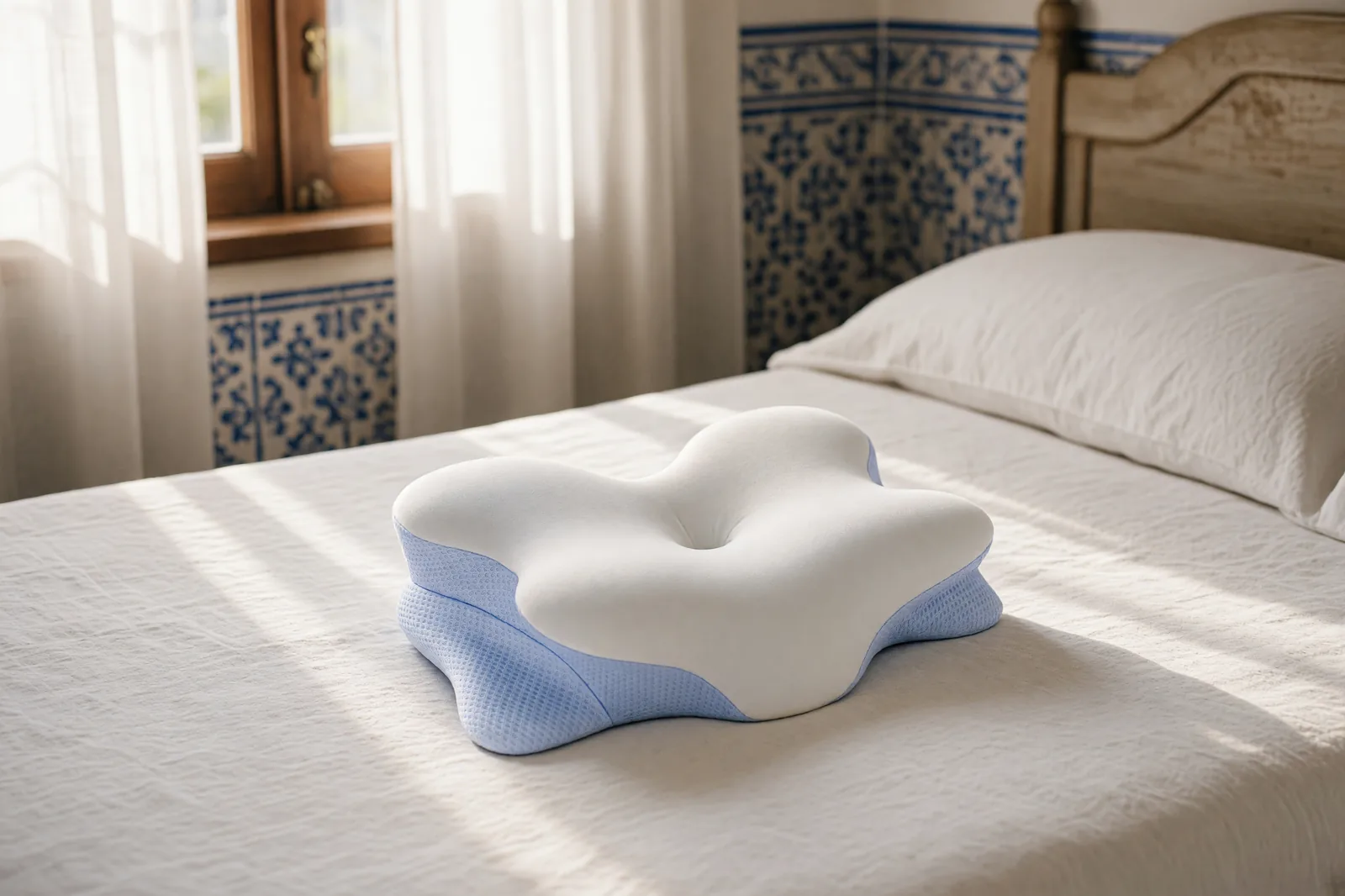
The design uses several distinct zones, each intended to provide a different type of support.
A dense memory-foam core is designed to retain its shape. The central section provides a defined area for the head, while the contoured neck area is designed to provide additional support. Raised side sections are intended to accommodate side sleeping and different sleeping positions.
The idea is straightforward: rather than relying on a conventional flat pillow, the shape provides a more structured surface for the head and neck.
There is also a practical consideration when trying a new pillow. According to the seller's published terms, Derila Ergo comes with a 60-night return period. This gives customers an opportunity to decide whether the design and feel suit their sleeping preferences.
The product is not presented as a treatment or as a solution for memory problems. The focus is on pillow design, positioning and everyday sleep comfort.
The first impression of a contoured memory-foam pillow can be different from that of a conventional soft pillow. The firmer feel and shaped surface may take some adjustment, particularly for someone accustomed to a flatter design.
That is why comfort is ultimately personal.
Some sleepers may prefer the more structured feel. Others may prefer a softer or less contoured pillow. The relevant question is whether the shape feels comfortable for your preferred sleeping position and provides the type of head-and-neck support you are looking for.
Derila Ergo is therefore best considered as one option within a broader sleep setup — not as a medical product and not as a solution for cognitive or age-related concerns.
View Derila Ergo and check the current offer.
Affiliate disclosure: We may receive a commission if you purchase through this link, at no additional cost to you.

The changes described in this kind of story should be kept in perspective.
A more comfortable night may mean waking up feeling more rested and physically comfortable. For some people, that can make the morning routine feel easier and more manageable.
But improved sleep comfort should not be presented as proof of improved memory, and a pillow cannot be used to claim a change in cognitive function or protection against dementia.
What the research supports is more limited: sleep is involved in processes related to memory, while sleep patterns can also change with age. Those findings provide useful context, but they do not establish that Derila Ergo produces a memory-related effect.
The practical takeaway is simpler.
If your pillow feels uncomfortable, leaves you repeatedly adjusting your position or does not provide the type of head-and-neck support you prefer, changing the pillow may be one reasonable part of improving your sleep environment.
Derila Ergo is designed around that idea: a contoured memory-foam shape intended to provide structured support for the head and neck during sleep.
No promise about memory. No claim about dementia.
Just a different pillow design to consider when looking at the quality and comfort of your nightly routine.
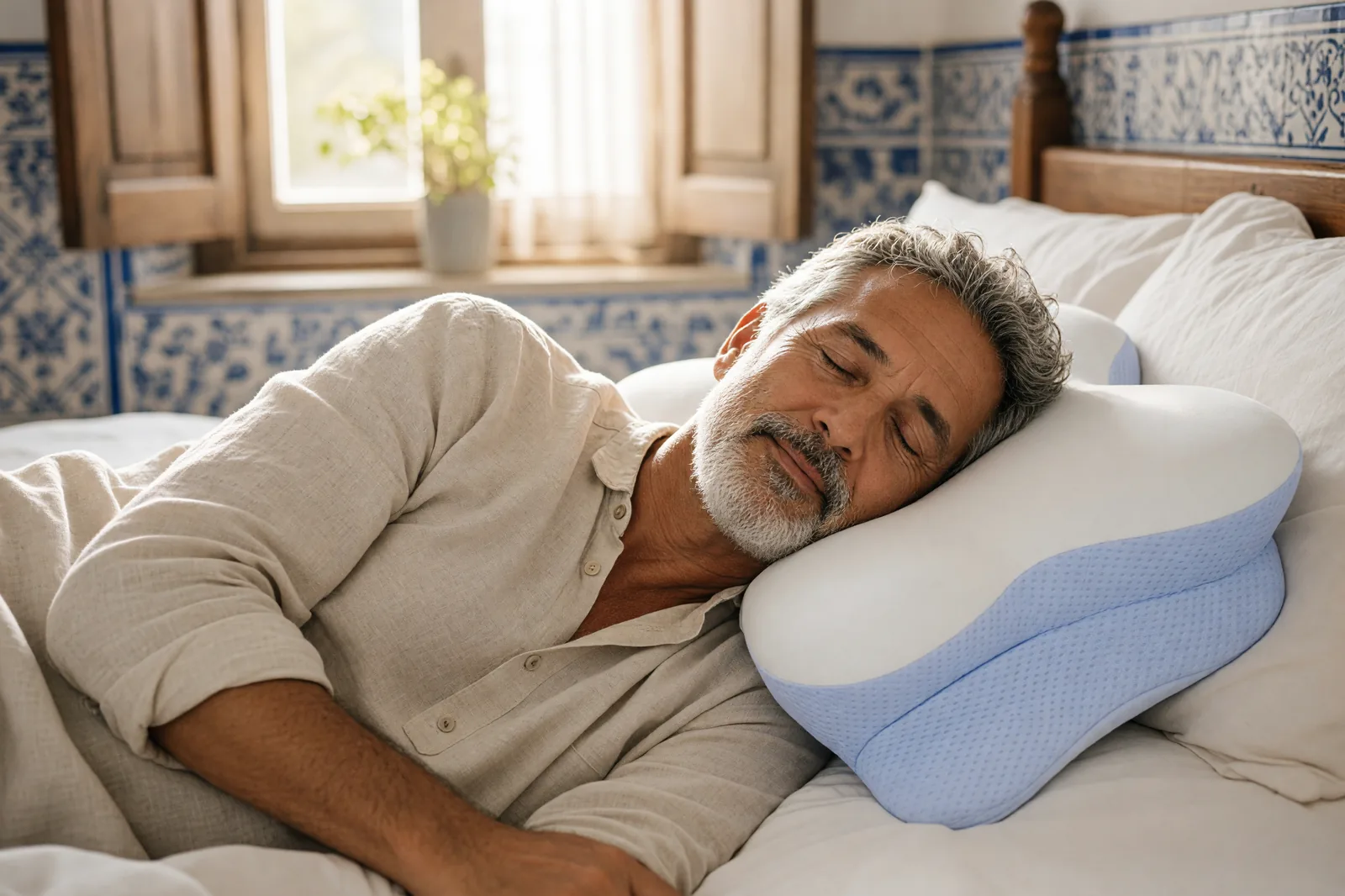
A pillow can be part of a shared household sleep setup, so it is natural for another person to try the same design and decide whether it suits their own sleeping position and comfort preferences.
The important point is to keep the expectations realistic.
Derila Ergo does not treat memory problems, dementia or other medical conditions. It is not a medicine and it is not a substitute for medical advice. If changes in memory concern you, or if sleep problems or pain persist, a qualified healthcare professional is the appropriate person to consult.
What a pillow can provide is much more straightforward: a particular shape, firmness and level of head-and-neck support. For some sleepers, a contoured design may feel more comfortable than a conventional pillow, particularly when sleeping on the side or changing positions during the night.
That makes the question worth considering from a practical perspective.
If your mornings regularly begin with an uncomfortable neck, tense shoulders or the feeling that your pillow is not working well for your sleeping position, look at the sleep environment before drawing conclusions about ageing or memory.
The useful question is not:
“What is wrong with my memory?”
It is:
“Could my sleep setup be more comfortable?”
Derila Ergo is one option to consider. Its contoured memory-foam design is intended to provide structured support for the head and neck, and the seller's published terms state that purchases include a 60-night return period.
View Derila Ergo and check the current offer.
Affiliate disclosure: We may receive a commission if you purchase through this link, at no additional cost to you.
Advertisement — Derila Ergo
Derila Ergo Memory-Foam Pillow
A contoured memory-foam pillow designed to provide structured head and neck support during sleep.
- High-density memory foam core designed to retain its shape
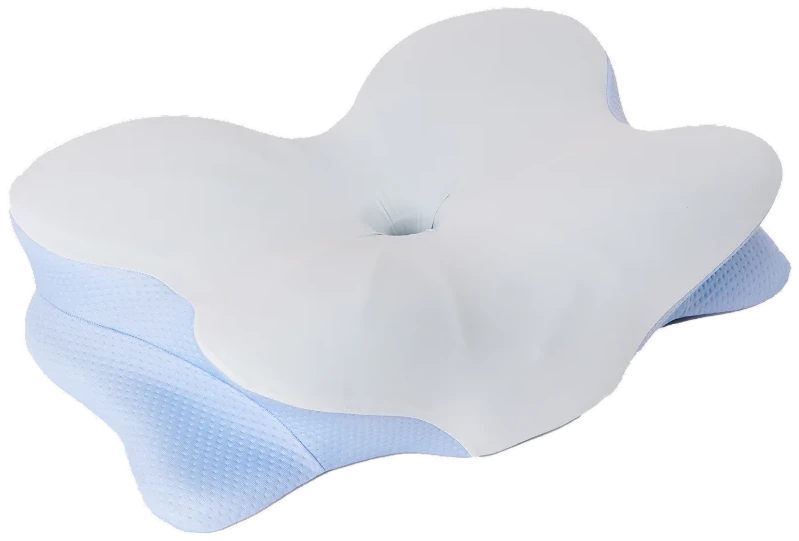
- Butterfly-shaped contour with a central head cradle and raised neck-support area
- Raised side sections designed for side sleeping
- Breathable mesh side panels and removable cover
- Compact design suitable for travel
- 60-night return period, according to the seller's published terms
Derila Ergo pillow: white memory-foam top with a central cradle and light-blue mesh side panels
We may earn a commission if you purchase through this link.
This is an illustrative advertorial created for promotional purposes. The reader and other people described in the story are fictional characters, and the lifestyle images are AI-generated illustrations. The product photograph is supplied by the seller.
The story does not describe a real customer's experience, and individual experiences with the product may vary. The pillow is not a medicine or a treatment and is not intended to diagnose, treat, cure or prevent any health condition. This content is not medical advice. If you have concerns about your sleep, memory or health, consult a qualified healthcare professional.
About the sources
The scientific publications below discuss sleep, memory, sleep fragmentation, ageing and pillow comfort in general. They were not conducted on Derila Ergo and do not establish that Derila Ergo provides any medical, cognitive or memory-related benefit.
Sources
- Diekelmann S., Born J. (2010). The memory function of sleep. Nature Reviews Neuroscience, 11, 114–126.
- Rasch B., Born J. (2013). About sleep's role in memory. Physiological Reviews, 93(2), 681–766.
- Mander B. A., Winer J. R., Walker M. P. (2017). Sleep and human aging. Neuron, 94(1), 19–36.
- Bonnet M. H., Arand D. L. (2003). Clinical effects of sleep fragmentation versus sleep deprivation. Sleep Medicine Reviews, 7(4), 297–310.
- Van Dongen H. P. A. et al. (2003). The cumulative cost of additional wakefulness: dose-response effects on neurobehavioral functions and sleep physiology. Sleep, 26(2), 117–126.
- Gordon S. J., Grimmer-Somers K., Trott P. (2009). Pillow use: the behaviour of cervical pain, sleep quality and pillow comfort in side sleepers. Manual Therapy, 14(6), 671–678.